
Pregnancy is a story told in inches and heartbeat counts, in tiny limbs and slow, steady growth. This guide walks through how a fetus develops, why certain weeks matter, and what parents can realistically expect as pregnancy progresses.
The big picture: trimesters, timing, and why weeks matter
Pregnancy is usually divided into three trimesters, each with its own pace and priorities. These divisions help doctors time screenings, track growth, and explain what’s happening inside the uterus without getting lost in individual week-to-week details.
Weeks are counted from the first day of the last menstrual period (LMP), which makes the “gestational age” about two weeks longer than embryonic age at conception. That convention can feel odd, but it standardizes care and determines when tests and appointments should occur.
How clinicians measure growth and milestones

Providers use several measures to track fetal progress: crown-rump length in early pregnancy, biparietal diameter and femur length in the second and third trimesters, and estimated fetal weight near term. These measurements feed into growth charts that show whether a fetus is tracking along an expected curve.
Ultrasound is the most common tool for visualizing structure and size, while noninvasive blood tests and occasional invasive procedures provide genetic and biochemical information. Together they form a timeline for each pregnancy, but remember, every baby moves at their own pace within a broad normal range.
Trimester-by-trimester milestones
Breaking development into trimesters helps highlight major events: organ formation early on, rapid growth and sensory development in the middle months, and maturation and fine-tuning of systems in the final stretch. Below, I’ll walk through typical milestones by week groups so you’ll know what’s happening inside week after week.
Think of these periods as rough neighborhoods rather than hard boundaries; individuals may hit milestones slightly earlier or later without any cause for alarm. Clinical decisions depend on patterns, not a single measurement or moment.
First trimester: foundations and rapid change (weeks 1–12)
The first trimester is when foundations form: the neural tube closes, the heart begins to beat, and rudimentary organs appear. Because organogenesis happens early, this period is especially sensitive to harmful exposures and some infections.
Despite the flurry of development, the embryo is still very small. Many expectant parents experience fatigue, nausea, and heightened emotions as hormones surge and the body adapts to pregnancy.
Weeks 1–4: conception, implantation, and very first cells
In the first month the fertilized egg divides, becomes a blastocyst, and implants in the uterine lining. Implantation triggers biochemical changes that stop menstruation and start the hormonal cascade of pregnancy.
At the end of week four an embryonic disk is present and the placenta begins forming. Most people don’t see a pregnancy test turn positive until about this time, when hCG levels become detectable in blood or urine.
Weeks 5–8: heart starts beating, limbs take shape
By week five the primitive heart tube begins rhythmic contractions, which can sometimes be seen on a transvaginal ultrasound soon after. Neural tube closure occurs around weeks five to six, a critical window for preventing defects—folic acid before conception and early pregnancy reduces risk significantly.
Limbs bud and major organs start to form. Facial features develop, and though the embryo is still less than an inch long by the end of this period, the blueprint for almost every structure is already in place.
Weeks 9–12: transition to fetus and early movement
At week nine the embryo is now called a fetus, reflecting the shift from organ formation to growth and refinement. Fingers and toes become separated, and small spontaneous movements begin even though most people can’t feel them yet.
By twelve weeks the risk of major structural anomalies decreases substantially, and many screening options—like the first-trimester combined test—are timed around the end of this trimester. Morning sickness often eases for many people as hormones settle into a new balance.
Second trimester: growth, structure, and the first kicks (weeks 13–27)
The second trimester often feels like the most tangible part of pregnancy: bump appears, movements are felt, and anatomy becomes clearer on ultrasound. Growth accelerates and sensory systems begin to organize.
It’s also the window for the detailed anatomy scan, which looks at organ structure, limb development, and the placenta’s placement. This period gives the clearest picture of many structural milestones.
Weeks 13–16: features refine and movement increases
By the early second trimester facial features are more distinct and fine motor structures like fingernails begin forming. Reflexive movements increase and may sometimes be felt as light flutters, particularly in people who’ve been pregnant before.
Statistically, the fetus starts to store some fat and bones begin to harden as mineralization proceeds. The placenta is functioning robustly and delivering the oxygen and nutrients needed for continued growth.
Weeks 17–20: quickening and anatomy scan
Quickening—the moment when parents first feel fetal movements—often occurs between 16 and 20 weeks. Those movements progress from fluttery to distinct kicks and rolls as muscle tone and coordination improve.
The detailed anatomy ultrasound typically occurs around 18–22 weeks and evaluates the brain, heart, kidneys, spine, limbs, and other organs. This scan is a major milestone for many families; it often feels like the first real “look” at the developing baby.
Weeks 21–24: sensory systems and viability threshold
Sensory structures gain complexity in this window. The inner ear develops enough for the fetus to perceive movement and balance, and the ears begin to hear muffled sounds from the outside world filtered through maternal tissues.
Medically, around 24 weeks is often cited as the lower limit of viability with intensive neonatal care. Outcomes improve significantly with each additional week of gestation, which is why delaying delivery when possible is crucial near this threshold.
Weeks 25–27: lung development and increased responsiveness
Late in the second trimester the lungs continue branching and type II cells begin making surfactant, a substance that helps air sacs stay open after birth. While not yet fully mature, the respiratory system is on a clear developmental path.
Fetuses respond more predictably to sound and light, and sleep–wake cycles become more apparent. Parents can start noticing patterns of movement that feel familiar as the fetus grows and space becomes more constrained.
Third trimester: growth, maturation, and preparing for life outside (weeks 28–40+)
The final trimester is about filling in and getting ready: fat accumulates, the brain folds and stores energy, and organs achieve functional maturity. Growth is rapid; fetal weight increases dramatically in the last eight weeks.
This period also focuses on positioning for birth, with most fetuses moving toward a head-down presentation. The maternal body prepares too, with changes in hormones and uterine shape that help trigger labor when the time comes.
Weeks 28–32: brain acceleration and practiced breathing
From about 28 weeks onward the brain’s cortex grows rapidly, neurons form connections, and the fetus practices breathing movements, inhaling and exhaling amniotic fluid. These exercises strengthen respiratory muscles and prepare the lungs for the transition to air.
Sensory responses are well developed: fetuses react to touch and show preference for familiar sounds, including their mother’s voice. This period sees substantial gains in weight and body fat important for temperature regulation after birth.
Weeks 33–36: final growth and positional changes
In the weeks just before term the fetus focuses on gaining fat, refining reflexes like sucking and swallowing, and assuming a vertex (head-down) position in most pregnancies. The lungs continue maturing, though they reach full functional capacity close to term.
Many providers discuss birth plans and signs of labor during this time. Group B streptococcus screening and counseling on labor logistics commonly occur between 35 and 37 weeks.
Weeks 37–40+: reaching full term and beyond
Once a pregnancy reaches 39 to 40 weeks, most systems are mature and the fetus is considered full term. While 40 weeks is the textbook due date, spontaneous labor can safely occur any time between 37 and 42 weeks for uncomplicated pregnancies.
After 41–42 weeks providers monitor closely for signs that the placenta is supporting the pregnancy effectively. The final days are often an anxious, expectant time filled with careful observation and readiness for the baby’s arrival.
System-by-system development: what each organ is doing and when
Looking at organs one by one clarifies why some periods are riskier than others and why certain tests are performed when they are. Below is a readable tour of major systems and their developmental timelines.
Nervous system and brain
The neural plate folds into the neural tube by week six, forming the brain and spinal cord. Early closure and proper folate levels reduce the risk of neural tube defects during this sensitive window.
Brain development continues throughout pregnancy and after birth, with rapid growth of neurons, glial cells, and connections in later trimesters. The third trimester is particularly important for cortical folding and synaptogenesis that support higher functions.
Cardiovascular system
The primitive heart begins contracting around five to six weeks, and by the end of the first trimester the chambers and major vessels take recognizable form. Fetal circulation uses shunts like the foramen ovale and ductus arteriosus to route blood differently than after birth.
Monitoring heart rhythm and structure via ultrasound and fetal echocardiography is routine if there are risk factors. Most structural heart anomalies are detectable during the mid-pregnancy anatomy scan.
Respiratory system and lungs
Lung branching and airway formation start early but functional maturation stretches into the third trimester. Surfactant production increases around 24–34 weeks, helping reduce the risk of respiratory distress if the infant is born preterm.
Fetuses practice breathing movements long before birth; these are important for diaphragmatic strength and coordination. Healthcare teams use gestational age and lung maturity assessments when planning deliveries near the limits of viability.
Digestive system and swallowing
The gut forms and rotates during early fetal life, and by midpregnancy the fetus swallows amniotic fluid, which helps develop digestive function and contributes to amniotic fluid volume balance. Meconium begins to form in the intestines late in the second trimester.
Swallowing and suck–swallow coordination become well-practiced reflexes in the third trimester, preparing the newborn for breastfeeding or bottle feeding. Gastrointestinal anomalies are typically screened for on ultrasound if suspected.
Musculoskeletal system
Limb buds form early and ossification centers appear in the first and second trimesters. Muscle tone increases through gestation, and fetal movement helps shape joints and bones by providing mechanical stimulation necessary for healthy growth.
By the third trimester most bones are well mineralized and muscle tone supports organized movement and reflexes. Reduced movement patterns can prompt further assessment, so healthcare providers monitor fetal activity as a sign of well-being.
Sensory systems: sight, hearing, taste, touch
Eyes develop early and by midpregnancy the eyelids can open and close; the fetus responds to bright light shined through the mother’s abdomen. The ears become functional in the second trimester and the fetus hears muffled external sounds and maternal heartbeat.
Taste receptors are active and amniotic fluid carries flavors from the maternal diet, which may influence later food preferences. Touch is one of the earliest senses to develop and plays a major role in fetal exploration and bonding.
Immune system and hematopoiesis
Early blood formation starts in the yolk sac and transitions to the fetal liver and spleen before settling in the bone marrow later in pregnancy. The placenta supplies maternal antibodies, primarily IgG, across the third trimester, giving the newborn passive immunity at birth.
Immune function matures after birth when the infant begins exposure to microbes and begins building their own active immunity. This transfer of maternal antibodies is a powerful reason why timing of maternal vaccinations like Tdap matters.
Ultrasounds and tests: what they look for at each stage
Ultrasound timing corresponds with developmental milestones and screening windows. Here’s a concise map of common tests and what they aim to detect.
| When | Test | Purpose |
|---|---|---|
| 6–9 weeks | Dating ultrasound | Confirm pregnancy location, heartbeat, and gestational age |
| 11–14 weeks | NT scan + blood work | Screen for chromosomal anomalies |
| 18–22 weeks | Anatomy scan | Detailed structural assessment of organs and placenta |
| 24–28 weeks | Glucose screening | Detect gestational diabetes |
| 35–37 weeks | GBS swab | Identify group B strep carriage before labor |
Noninvasive prenatal testing (cell-free DNA) is commonly available from around ten weeks and screens for common chromosomal differences with high sensitivity. Diagnostic tests like chorionic villus sampling (CVS) or amniocentesis provide definitive genetic diagnoses but carry procedure-related risks and are typically offered when indicated.
What influences fetal development: risks and protective factors
Genetics provides the blueprint, but maternal health, environment, and behavior shape how that plan unfolds. Some factors promote healthy development, while others increase the risk of complications.
Nutrition, supplements, and maternal health
Folic acid before conception and during early pregnancy dramatically lowers the risk of neural tube defects and is one of the most evidence-based preventive steps. Adequate protein, iron, calcium, and calories are also vital for steady growth and organ maturation.
Chronic conditions such as diabetes and hypertension require management during pregnancy because they affect placental function and fetal growth. Regular prenatal care helps optimize maternal health and fetal outcomes through monitoring and timely interventions.
Medications and substances to avoid
Some medications are teratogenic—meaning they can cause fetal harm—and must be avoided or replaced with safer alternatives when possible. Isotretinoin and certain anticonvulsants are classic examples; always consult a clinician before starting or stopping medications when pregnant.
Alcohol, tobacco, and illicit drugs carry known risks for growth restriction, congenital anomalies, and neurodevelopmental problems. Avoiding these substances and seeking help for cessation supports healthier fetal development and better newborn outcomes.
Infections and environmental exposures
Infections like cytomegalovirus (CMV), toxoplasmosis, rubella, and Zika can harm the developing fetus, especially early in pregnancy. Vaccination and hygiene measures reduce these risks and are standard recommendations in prenatal counseling.
Environmental toxins—lead, mercury, and certain industrial chemicals—can also impact development. Awareness of occupational and household exposures allows pregnant people to minimize risk through reasonable precautions and professional advice when necessary.
Movement and behavior: when and what you’ll feel
Fetal movement is both a developmental milestone and a practical sign of fetal well-being. Parents often use movement patterns to gauge how baby is doing, especially in the third trimester.
Quickening and movement patterns
First-time parents typically notice the first flutters, called quickening, around 18–20 weeks; people who have been pregnant before may feel movement as early as 15–16 weeks. Movements progress from sporadic twitches to more forceful kicks and rolls as strength increases.
Later in pregnancy, many clinicians recommend daily movement counts—often a goal like ten movements in two hours when activity is being monitored. Changes in pattern, frequency, or intensity should prompt contact with a healthcare provider, as they can indicate a need for assessment.
Sleep–wake cycles and fetal behavior
Fetuses develop sleep–wake patterns and periods of activity and rest. These cycles may become predictable and allow parents to sense when the baby tends to be most active.
Behavioral states, such as quiet sleep and active wakefulness, are observable on fetal monitoring and are useful markers in research and clinical care for assessing central nervous system function.
Variability and why comparing isn’t always helpful
No two fetuses grow in exactly the same way. Genetics plays a large role, but so do maternal size, ethnicity, diet, and placental efficiency. Charts present averages, not strict rules.
Small-for-gestational-age (SGA) and large-for-gestational-age (LGA) labels can be useful clinically, but they require context. A fetus measuring smaller than average may be constitutionally small yet healthy, while a larger fetus may face delivery-related challenges; clinicians interpret growth in a broader clinical picture.
Common concerns and when to call your provider

Understanding which signs require prompt attention helps prevent unnecessary anxiety and ensures timely care when needed. While most pregnancies progress smoothly, some changes deserve rapid evaluation.
- Decreased or sudden change in fetal movement should be reported promptly.
- Vaginal bleeding or severe abdominal pain at any gestational age requires urgent assessment.
- High fever, severe headache, visual changes, or sudden swelling may signal preeclampsia or infection and should be evaluated quickly.
Providers often have triage systems and may request fetal monitoring or an ultrasound to assess fetal heart rate and activity. Trusting your instincts and calling when something feels wrong is a practical safety measure.
Preparing for screenings and what results really mean
Screening tests estimate risk, while diagnostic tests confirm conditions. Understanding the difference helps set expectations before you get results and reduces confusion if a test comes back “positive.”
Interpreting screening results
Noninvasive prenatal testing has high sensitivity for common chromosomal aneuploidies but is still a screen, not a diagnosis. A positive screen typically leads to an offer of diagnostic testing to confirm the finding.
Anatomy scans can identify many structural anomalies but not every possible condition; a normal scan reassures about many major defects but does not guarantee perfection. Providers discuss limitations and next steps when abnormalities are suspected.
Practical tips for supporting healthy development
Simple steps taken before and during pregnancy have outsized effects on fetal health. Some are medical recommendations; others are common-sense habits that support steady growth.
- Start prenatal vitamins with 400–800 micrograms of folic acid before conception if possible.
- Schedule early prenatal care and follow recommended screening timelines.
- Aim for a balanced diet, moderate exercise as advised, and sufficient sleep.
- Avoid smoking, alcohol, and illicit drugs; discuss medication safety with your provider.
- Practice infection prevention—hand hygiene, safe food handling, and up-to-date immunizations.
These steps don’t eliminate all risk, but they improve the odds that development proceeds smoothly and that newborns start life as healthy as possible.
Tools for tracking and staying informed
Many parents find structured tracking helpful: weekly pregnancy apps, kick-count charts, and appointment trackers keep milestones and tests organized. Use these tools as complements to clinical care rather than replacements.
When using apps, choose ones that reference reputable medical sources and that avoid creating unnecessary alarm. Discuss any concerns raised by an app with a clinician who can interpret findings within the full medical context.
A personal note: variability and the human side of milestones
I’ve spoken with dozens of parents about that first flutter or the relief after a reassuring anatomy scan. One friend felt nothing until 22 weeks, then had a very active third trimester; another felt movement at 14 weeks and worried it was too early, only to have a perfectly healthy delivery months later.
Those conversations taught me that milestones translate into stories—small acts of patience, moments of joy, and occasional worry. Medical timelines exist to guide care, but the lived experience of pregnancy is deeply individual, full of nuance that charts can’t capture.
When things don’t follow the expected path
Not all pregnancies follow textbook timelines, and deviations prompt evaluation rather than immediate alarm. Sometimes growth lags due to placental insufficiency, genetic differences, or maternal factors that can be addressed or monitored.
In other cases, anomalies identified on scans lead to further testing, specialist referrals, and careful counseling about options and outcomes. Support networks and informed clinicians help families navigate these complex, emotional decisions.
How fetal milestones relate to long-term outcomes
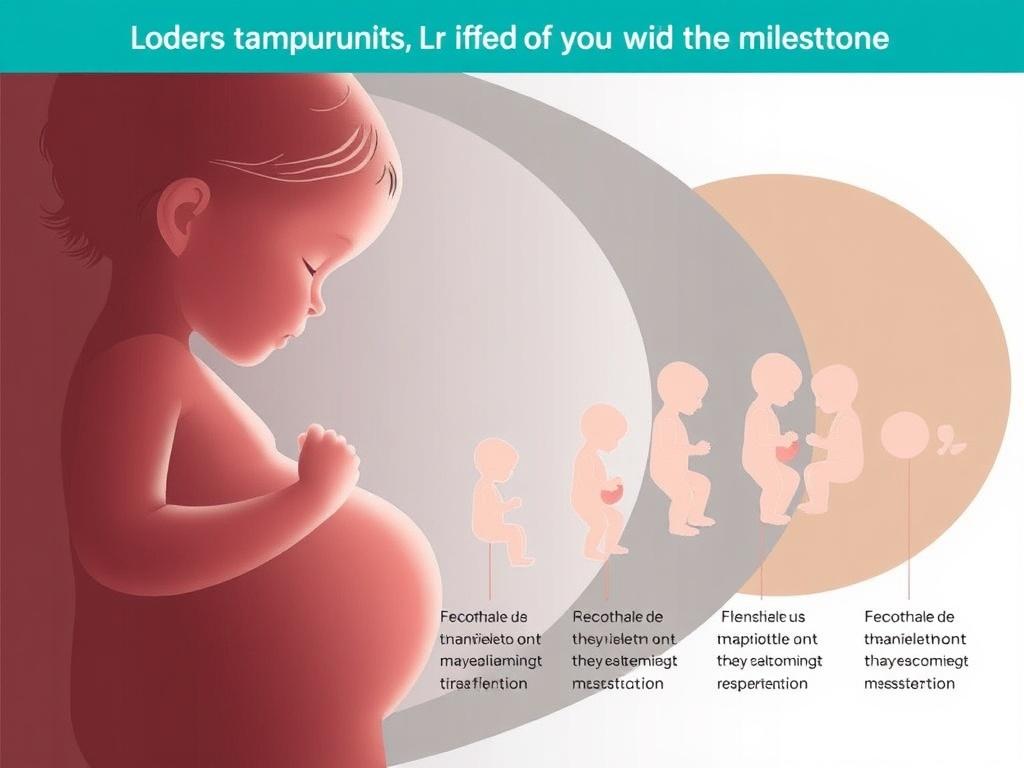
Many early milestones set the stage for later health, but predicting long-term outcomes from a single prenatal measurement is rarely precise. Development is cumulative and interactive: genetics, prenatal environment, childbirth, and postnatal care all shape future health.
Early interventions—nutritional support, avoiding harmful exposures, appropriate prenatal care—improve trajectories. Yet the most sensitive organs, like the brain, continue developing after birth, so supportive care in infancy also matters a great deal.
Final practical checklist for milestone awareness
Keeping a short checklist in your phone or journal can make the months more manageable and help you catch important screening windows and signs to watch for. Use it to mark appointments, tests, and personal milestones like the first felt movement.
- Confirm pregnancy and establish prenatal care early.
- Start prenatal vitamins and follow dietary guidance.
- Schedule nuchal translucency / first-trimester screening around 11–14 weeks if desired.
- Plan anatomy scan at 18–22 weeks and discuss findings with your provider.
- Monitor fetal movement from midpregnancy onward and report any concerns.
- Complete glucose screening (24–28 weeks) and Group B strep testing (35–37 weeks).
Keeping this list handy helps you participate in care actively and reduces the stress of wondering whether something important was missed.
Understanding how a fetus develops is part science, part reassurance, and part human story—one measured heartbeat at a time. With good prenatal care, mindful habits, and trusted medical guidance, most pregnancies progress toward healthy outcomes, and the milestones you’ll watch for become the markers of a life taking shape.

 A complete guide to maternity wear: practical style for every trimester
 Dealing with morning sickness: natural remedies
 Bonding with your baby before birth: gentle ways to begin now
 Essential products for postpartum recovery that actually help