
Creating a nursery feels like setting the scene for the first chapters of a life. Whether you’re expecting your first baby or reworking a room for a growing toddler, you want a space that balances calm aesthetics with rigorous safety.
Designing a Safe and Soothing Nursery starts with a clear list of priorities—sleep safety, practical storage, and a calm visual mood—then layers in comfort and personality. Below I’ll walk you through practical choices, common pitfalls, and thoughtful details that make a nursery both secure and serene.
Start with safety: the non-negotiables
Safety isn’t decorative. Before you pick a paint swatch or a mobile, verify the basics: a firm, properly fitted mattress in a compliant crib; smoke and carbon monoxide detectors on every floor; and childproofing for outlets, cords, and furniture. These items form the foundation of a healthy nursery and are non-negotiable.
Buy cribs that meet current safety standards and avoid off-brand modifications. Look for certifications and the JPMA (Juvenile Products Manufacturers Association) label when possible, and check for any active recalls on major items like cribs, monitors, and mattresses.
Install and test alarms and detectors as soon as the room is ready. Also plan for electrical safety: use outlet covers, secure extension cords out of reach, and place baby monitors and lamps where cords can’t tangle into a crib or climbing zone.
Crib and sleep safety essentials
Choose a crib with fixed sides and slats spaced no more than 2 3/8 inches apart to prevent entrapment. Avoid drop-side cribs and remove any cushions, bumper pads, or pillows from the sleeping area—current guidance recommends a bare crib with a snug sheet or a sleep sack.
Mattresses should be firm and the right size for the crib; gaps larger than two fingers between mattress and crib frame can be hazardous. Keep blankets, stuffed animals, and loose bedding out of the crib for infants; these items increase the risk of suffocation and should be introduced much later, under supervision.
Maintain a comfortable room temperature and avoid overdressing your baby. Overheating has been linked to sleep-related incidents, so the simplest safety move is a well-fitting sleep sack and a thermometer to monitor the nursery climate.
Anchoring, cords, and window safety
Dressers and bookcases can topple, so anchor every tall piece of furniture to studs in the wall. Use the hardware that comes with the furniture or purchase sturdy straps rated for the job, and test anchors after installation to make sure they hold.
Window blind cords present a strangulation risk—choose cordless blinds or secure cords out of reach with cleats or cord shorteners. If you have a sash window that can be opened, fit window stops to prevent a child from climbing or falling.
Keep curtain ties, plant hangers, and any decorative cords well out of reach. Even decorative items can become hazards when a curious toddler explores, so design with a “no loose-cords” rule in mind.
Creating a soothing palette and lighting plan
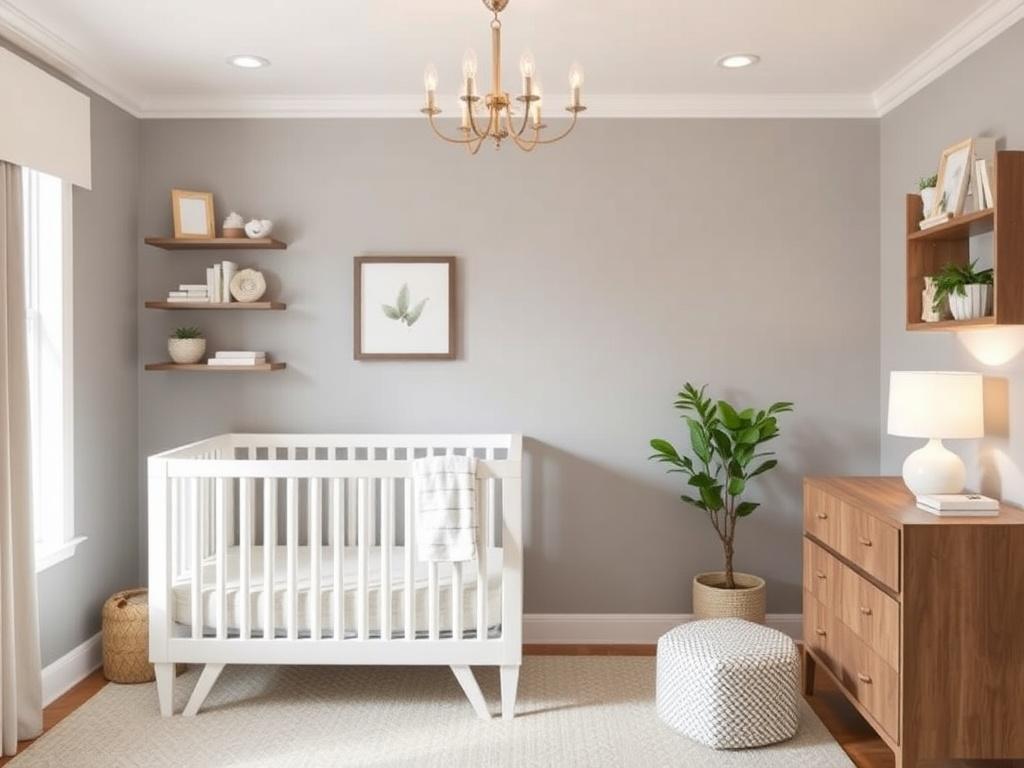
A nursery’s color and light shape how both baby and parent feel in the space. Soft, muted tones often work best because they reduce visual clutter and create a calm atmosphere for sleep and feeding times.
Consider warm neutrals or gentle pastel accents rather than high-contrast brights. If you love bold color, use it as an accent on one wall or in textiles rather than plastering it everywhere; this keeps the room restful without sacrificing personality.
Paint, VOCs, and finishes
Choose low-VOC or zero-VOC paints and allow the room to air out before moving in large textiles or soft furnishings. Many paints now carry low-emission certifications—look for those to reduce off-gassing and potential irritation for sensitive skin or lungs.
Use washable finishes in high-touch areas, especially near diapering and feeding zones. Paint with a satin or semi-gloss finish where scuffs and cleaning are frequent, and reserve matte finishes for accent walls if you want a softer look.
Layered lighting for function and calm
Design three layers of light: ambient, task, and accent. Overhead lighting gives general illumination, a dedicated task light helps during late-night feedings or diaper changes, and a dimmable nightlight keeps the room soothing for sleep transitions.
Use warm-color bulbs around 2700–3000K for a cozy feel and install dimmers to shift brightness quickly. Blackout shades can be lifesavers for daytime naps, while a small, soft-glow nightlight prevents abrupt transitions when checking on a sleeping infant.
Selecting furniture that’s both safe and adaptable
Furniture in a nursery should be durable, easy to clean, and versatile enough to serve through multiple phases of childhood. Investing in pieces that convert—like cribs that become toddler beds—stretches your budget and reduces waste.
Look for solid construction and finishes without harmful chemicals. Avoid furniture treated with flame retardants when possible; many older and lower-cost items use chemical coatings that aren’t ideal for prolonged infant exposure.
Changing table or dresser: smart decisions
A dedicated changing table is convenient, but a sturdy dresser with a changing pad on top can function the same way and remain useful later. If you choose a changing table, confirm that raised sides and safety straps are part of the design to prevent falls.
Place your changing area close to storage for diapers, wipes, and creams to avoid leaving the baby unattended. If you must step away, always lift the baby with you rather than leaving them on the surface alone.
Seating for feeding and soothing
A comfortable, supportive chair matters more than decor trends in a nursery. Nursing sessions and late-night soothing are long, so pick a chair with good back support and wipeable upholstery; gliders and recliners can ease late-night routines.
I learned this the hard way when I tried to “make do” with a decorative accent chair. Within weeks I traded it for a well-cushioned glider, and the difference in comfort—especially during colicky nights—was dramatic.
Textiles, bedding, and soft surfaces
Textiles provide warmth and texture but also harbor dust and allergens if they aren’t washable. Choose fabrics that can stand frequent cleaning and are free of harsh dyes or flame retardant chemicals.
For crib bedding, stick to fitted sheets designed for the mattress model you’re using. Avoid quilts, heavy blankets, and bumper pads for infants; these do more harm than good in the first year.
Rugs, pads, and floor coverings
Rugs add comfort for play and protect against slips, but pick low-pile weaves that are easy to vacuum. Use a non-slip rug pad underneath to prevent sliding, and wash smaller rugs on a regular schedule to reduce dust buildup.
If you have hardwood floors, consider a washable rug near the play area for tummy time. For heated floors, verify safe temperature ranges and avoid covering heat sources excessively.
Safe selections for fabrics and finishes
Natural fibers like cotton and bamboo can be good choices for bedding and clothes because they breathe well and are often machine-washable. When buying, prefer products labeled Oeko-Tex or GOTS (Global Organic Textile Standard) to reduce exposure to harmful chemicals.
Avoid foam mattresses and pads that smell strongly of chemicals; if you must buy these, air them out thoroughly in a well-ventilated space before introducing them to the nursery.
Small touches that support sleep and routine
Rituals and small comforts often have outsized effects on sleep quality. A consistent bedtime routine—bath, book, dim lights, and a soft lullaby—signals that it’s time to wind down and helps infants form sleep associations.
White noise machines can mimic the whooshing sound babies hear in utero and mask household noise. Choose a model designed for nurseries with volume limits to protect hearing, and place it across the room from the crib rather than right next to the baby’s head.
Mobiles, toys, and sensory items
Mobiles are lovely but check that they’re mounted securely and out of reach once the baby can push up. For newborns, high-contrast mobiles support visual development; swap to simpler, sturdier toys as mobility increases.
Avoid diffusing essential oils in the nursery; many popular oils are potent and not recommended for infants. If you want a fresh scent, opt for gentle detergents and frequent laundering of fabrics rather than fragrance diffusers.
Organization and storage for sanity
A nursery quickly becomes cluttered without systems for storage. Use a combination of drawers, open shelving, and bins to make daily items easy to reach while keeping the look tidy.
Think vertically: wall-mounted shelves and peg rails free up floor space and keep toys accessible at toddler height. Label bins or use transparent containers to speed cleanup and help visitors find diapers or wipes when helping out.
Toy rotation and minimizing overstimulation
Too many toys can overwhelm rather than entertain. Rotate a small selection of toys every week to keep play fresh and promote deeper engagement with each object.
I set up three labeled bins—“today,” “this week,” and “away.” We filled them with a few toys apiece and found that the baby engaged more deeply with items brought out of storage.
Storage comparison table
| Storage type | Best for | Pros | Cons |
|---|---|---|---|
| Open shelving | Display toys, books | Accessible, encourages independence | Collects dust, needs neatness |
| Drawers/dressers | Clothes, linens | Contains mess, multi-use | Requires wall anchoring |
| Bins and baskets | Small toys, diapers | Flexible, inexpensive | Can look cluttered if mismatched |
Safety beyond the nursery: integrating house systems
A child’s safety depends on the whole home, not just one room. Ensure that stairs are gated, bathrooms have locks or childproof latches, and that all caregivers know emergency procedures and locations of first-aid supplies.
Keep a first-aid kit and a reliable thermometer in or near the nursery, and post emergency contacts where they’re visible. If you have pets, plan supervised introductions and manage pet access to the nursery until routines are stable.
Monitors, privacy, and technology
Baby monitors offer peace of mind, but pick a system with encrypted signals if it’s internet-connected. Change default passwords, update firmware, and place cameras thoughtfully to preserve privacy while still monitoring the crib and play zones.
Consider audio-only monitors if you want less tech in the room; they can be less intrusive and reduce temptation to check feeds constantly. Movement monitors and wearables have pros and cons—use them as tools, not as replacements for close caregiving.
Designing for growth and developmental needs
Plan the room to transition easily from newborn to toddler without a full renovation. A convertible crib, adjustable storage height, and modular pieces save money and create continuity in the child’s environment.
Incorporate low shelves and soft floor space for early crawling, and reserve a clear corner for gross-motor play once the child starts walking. Changing the room’s layout seasonally can help adapt to developmental stages without major overhauls.
Montessori-inspired ideas
Montessori principles favor accessibility and autonomy: low hooks for clothes, a small mirror at child height, and a low bed or floor mattress when it’s time to transition from crib to toddler bed. These elements encourage independence and safe exploration.
I installed a low bookshelf and a small rug at my child’s eye level; over time it became his favorite spot for independent play and reading, which made transitions smoother for the whole family.
Creating a sensory-friendly corner
Babies and toddlers respond to tactile and visual variety. A small sensory corner with safe textures—soft fabrics, wooden toys, and board books—can be a dedicated place for calm, focused play.
Keep sensory items rotation-based to prevent overstimulation, and avoid too many blinking lights or loud mechanisms. Simplicity is often more engaging for young children than complexity.
Budgeting and prioritizing purchases
Nursery budgets vary widely, but safety items should come first. Prioritize a safe crib, a firm mattress, smoke detectors, and a secure car seat above decorative splurges.
Secondhand items can be excellent for non-sleep furniture, provided you inspect for structural damage, missing parts, or recalled pieces. Always buy new for items tied to safety standards—car seats and mattresses are best purchased new.
Where to save and where to splurge
Save on décor and smaller accessories that are meant to change—a handmade wall hanging or thrifted frame, for example. Splurge on ergonomics for caregivers: a quality glider or a good mattress for restful nights matters more than a designer rug.
Consider DIY projects for personalized touches that won’t compromise safety, like hand-painted wooden shelves anchored securely or simple blackout curtain panels sewn to your measurements.
Common mistakes and how to avoid them
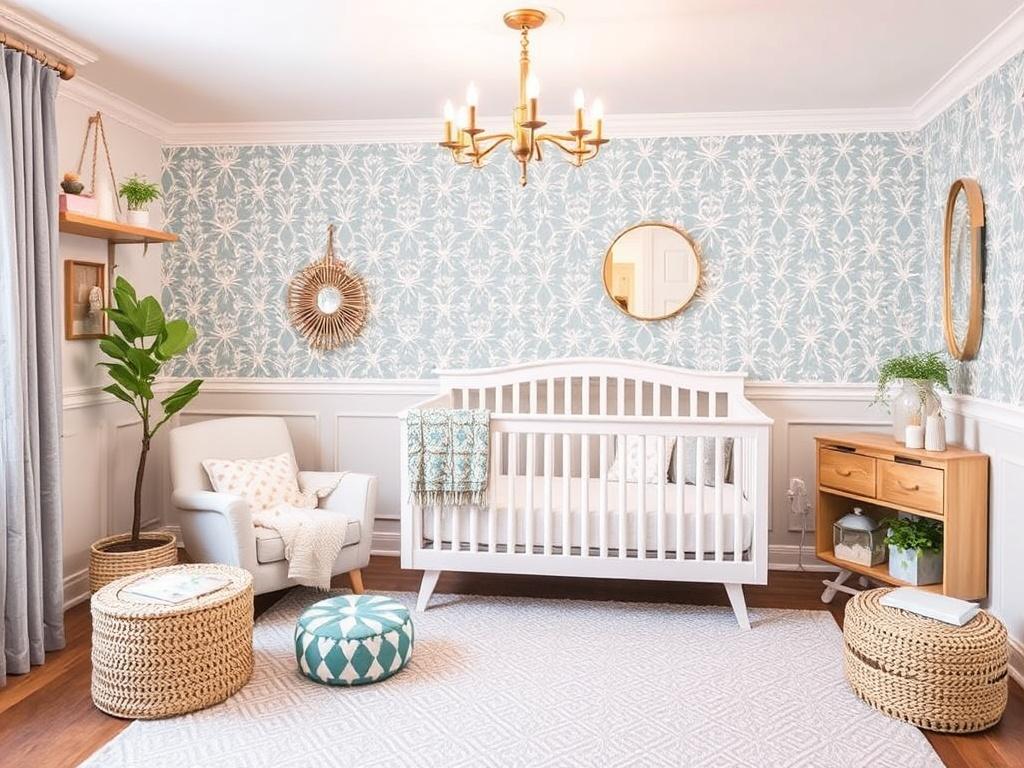
New parents often underestimate how quickly a baby moves from immobile to mobile. Mistakes like leaving toys in the crib, failing to anchor furniture, or overlooking cords are common but preventable with a checklist and a walk-through from a child’s perspective.
Another frequent error is choosing fabrics or finishes for how they look rather than how they’ll wear. Opt for easy-to-wash and durable textiles to avoid repeated replacements or hygiene problems.
- Don’t use bumper pads or loose bedding for infants.
- Always anchor tall furniture and check anchors periodically.
- Avoid hanging heavy items directly above the crib or changing table.
- Keep small decor items out of reach of curious fingers.
A practical checklist to get you started
The following checklist is organized by priority so you can tackle the nursery in manageable steps. Use it for shopping, a pre-baby walkthrough, and seasonal safety reviews.
| Category | Must-have | Nice-to-have |
|---|---|---|
| Sleep | JPMA-compliant crib, firm mattress, fitted sheets, sleep sack | Blackout shades, breathable monitor |
| Safety | Smoke & CO detectors, outlet covers, furniture anchors | Cabinet locks, door knob covers |
| Care | Changing pad, diaper supplies, comfortable chair | Diaper pail, spare changing pad covers |
| Organization | Dresser or shelving, labeled bins, laundry hamper | Toy rotation bins, decorative baskets |
Real-life examples: choices that worked
When we set up our nursery, we prioritized a convertible crib and a sturdy dresser we could anchor to the wall. The crib converted into a toddler bed three years later, which saved us a major replacement expense and kept the room familiar for our child.
We also invested in a good glider with removable, machine-washable covers. It paid off after a few months of feedings, spit-ups, and late-night rocking—washability was no longer a nice-to-have but a necessity.
Keeping the nursery safe as your child grows
Safety is an evolving target. What’s safe for a newborn—an empty crib and soft white noise—changes as the child begins to roll, sit, crawl, and walk. Plan seasonal or milestone-based safety checks to reassess furniture, decor, and hazards.
When your child starts pulling up, move fragile items higher, add corner guards, and double-check anchors. Transition to toddler-safe bedding and a low bed when climbing becomes an issue, and reassess monitor placement for new mobility patterns.
Milestone safety timeline
Adopt a simple schedule: newborn (0–6 months) focuses on sleep safety and temperature control; mobile infant (6–12 months) adds anchoring and cord management; toddler (12–36 months) emphasizes furniture rearrangement, toy safety, and independent access to storage. Use these milestones to guide upgrades and adjustments.
Regularly inspect gear for wear and replace anything that becomes compromised. Small fixes like tightening screws or replacing frayed straps prevent larger hazards down the line.
Design notes for visitors and shared caregiving
Keep a small folder or whiteboard with feeding preferences, allergies, emergency contacts, and the sleep routine near the changing area. This saves time and reduces confusion when grandparents, babysitters, or partners step in.
Display supply basics—spare diapers, wipes, and a quick-change outfit—within reach and in plain sight. Guests will appreciate the guidance and your baby benefits from consistent care.
Finishing touches that make a nursery feel like home
Personal items lend warmth: a framed family photo displayed out of the crib’s reach, a soft handmade blanket kept on a shelf, or a small plant placed safely away from curious hands. These touches help the room feel lived-in without sacrificing safety.
Consider acoustic treatments like a thick curtain or a fabric wall hanging to soften sound if you live in a noisy area. Subtle sound dampening helps both daytime play and nighttime sleep without altering the room’s look dramatically.
Where to go for trusted guidance
Consult pediatric sleep guidelines, reputable safety organizations, and certified retailers for current rules and recalls. Pediatricians and local parenting groups can also offer tailored advice based on your home layout and community resources.
When in doubt about a specific product, check manufacturer instructions, read verified user reviews, and look up recall histories on government safety sites. A few minutes of research can prevent months of worry.
Putting the pieces together
Designing a nursery is an act of care: it balances practical safety with the soft rituals that make home feel secure. Start with the fundamentals—sleep safety, anchored furniture, and cleanable textiles—and layer in personalized, calming elements that support routine and development.
As your child grows, revisit choices and remodel in small steps rather than trying to anticipate every future need. A well-planned nursery will evolve with your family, offering both safety and a gentle, reassuring place for first words, first steps, and countless quiet moments.

 Get ready to feed: breastfeeding essentials before baby arrives
 When the first contractions arrive: how to recognize labor’s opening moves
 Traveling while pregnant: tips and precautions
 Sleep solutions for each trimester: practical strategies for better rest