
Pregnancy care is a domain where medicine, culture, and intimate human experience intersect. Across millennia, the ways societies have tended to pregnant people reveal shifting beliefs about bodies, knowledge, and power. This article traces The Evolution of Pregnancy Care Through History by following the practices, people, and technologies that transformed a private life event into a central public-health concern.
Roots in ritual and community: prehistoric to ancient practice
In the earliest societies, pregnancy care was woven into the fabric of daily life rather than segregated into a special clinic. Communities used ritual, herbal knowledge, and experienced women—often called midwives or wise women—to guide expectant mothers. These practices combined fertility rites, food taboos, and practical measures for comfort and protection.
Archaeological finds and ethnographic records show that the birthing space was typically domestic and communal. Objects associated with fertility and amulets appear near graves and household shrines, suggesting that protection of mother and child had both medical and spiritual dimensions. This close social involvement provided practical support: massages, warm compresses, repositioning during labor, and assistance from several attendants.
Herbal pharmacopoeias varied by region but often included plants for nausea, cramping, and purported labor-inducing agents. Some remedies had genuine physiological effects; others were symbolic. The boundary between practical medicine and ritual was porous, which helped communities cope with uncertainty and loss when pregnancy failed or childbirth ended tragically.
Egypt, Mesopotamia, and early textual medicine
In ancient Egypt and Mesopotamia, written records begin to document pregnancy care in more detail. Medical papyri and cuneiform tablets record recipes, prognostic tests, and advice for expectant mothers. These texts mix empiricism with magical thinking: poultices and baths sit alongside charms intended to ward off malevolent spirits.
Egyptian obstetrical texts describe fetal positions, labor management, and instruments used in assisted deliveries. Midwives were respected practitioners, often operating within households or temple settings. Their knowledge was practical, accumulated through apprenticeship and repetitive practice rather than formal schooling.
Greece and Rome: early systematic thinking
Greek physicians such as Hippocrates and later Roman writers like Soranus developed systematic ideas about pregnancy and childbirth. They classified pregnancy stages, gave dietary recommendations, and advised on complications. Soranus, for instance, emphasized gentleness in handling pregnant women and supported the role of trained midwives.
Yet Greco-Roman medicine also introduced more hierarchical structures, with physicians gaining prestige and sometimes displacing midwives in urban settings. This shift began a long-term tension between lay, community-based birth attendants and professionally credentialed practitioners.
China, India, and parallel traditions
In East and South Asia, distinct but equally rich traditions emerged. Classical Chinese medical texts integrated pregnancy into a broader system of yin-yang and qi, prescribing acupuncture, herbal tonics, and dietary regimes. Ayurvedic texts from India discussed trimesters, fetal development, and rejuvenative therapies.
These systems emphasized balance and prevention. Prenatal regimens often sought to build maternal strength to reduce labor complications. Like Greco-Roman sources, Asian medical traditions trained specialists, but much care remained familial and community-centered.
Medieval care: home, the church, and continuity of midwifery
When the ancient world gave way to medieval Europe, pregnancy care remained primarily a domestic affair. The household sustained expectant women with networks of female relatives and local midwives. Birth practices were embedded in communal rhythms rather than institutional medicine.
The church influenced moral and ritual aspects of childbirth, shaping prayers, confessional practices, and ideas about purity. Sometimes ecclesiastical authorities regulated midwifery, but much practical guidance continued to pass by apprenticeship and oral tradition. Herbal lore and empirical remedies persisted alongside religious observances.
Across other regions, similar patterns held: birth was a community event supported by women with accumulated practical expertise. Formal medical intervention was rare and typically a last resort. This continuity preserved many artisanal skills, such as assisting malpositioned fetuses and managing hemorrhage with available means.
Early modern shifts: print, science, and contested authority
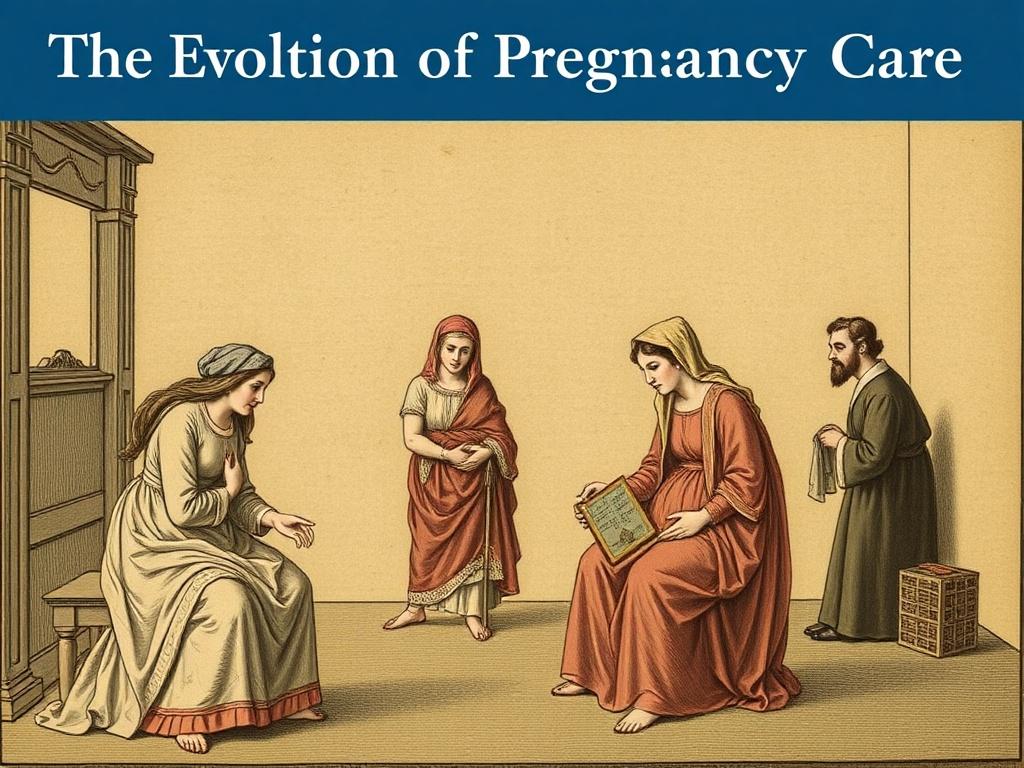
The invention of the printing press and the spread of vernacular texts in the 16th and 17th centuries changed how pregnancy knowledge circulated. Manuals for midwives were published alongside anatomical works aimed at physicians, creating parallel literatures. This proliferation of texts began to erode exclusive oral transmission while spreading new techniques and ideas.
At the same time, increasing professionalization of medicine in cities led to competition between male physicians and female midwives. Male practitioners began to develop instruments—most notably forceps—that could intervene in obstructed labor. These innovations saved lives in some cases but also brought new risks when used without proper skill.
Debates about authority intensified. Who had the right to attend births? What constituted training? These questions were political as much as medical, reflecting shifting gender relations and the rise of institutional medicine.
The 18th and 19th centuries: obstetrics, instruments, and early hazards
By the 18th century, “man-midwifery” became increasingly common in Europe, with formally trained male obstetricians attending complex births. The forceps family, improved by the Chamberlen and later innovators, allowed extraction that midwives had not been able to perform. This era marked the beginnings of obstetrics as a specialty.
However, hospital births and surgical interventions exposed a crucial blind spot: infection. Before germ theory, physicians moved between autopsies and delivery wards with little regard for cross-contamination. The result was severe maternal puerperal fever in many urban hospitals. It took pioneers like Ignaz Semmelweis and later Joseph Lister to connect hand hygiene and antisepsis with improved outcomes.
These improvements were uneven. Where antiseptic practice was adopted, maternal mortality fell. Elsewhere, crowded clinics continued to pose serious risks. The 19th century thus reveals a paradox: technical progress sometimes increased danger until it was paired with hygienic practice and sound science.
Hospitals and the transformation of childbirth in the early 20th century
By the early 1900s, hospital births were becoming more common in industrialized countries. Hospitals promised specialist care, anesthesia, and surgical options. For many families, the hospital represented security and modernity. Public health efforts increasingly treated pregnancy as a site for preventive medicine.
Antibiotics, which arrived mid-century, revolutionized the safety of childbirth. Penicillin and later agents dramatically reduced mortality from infection. Coupled with blood transfusion capabilities and improved surgical techniques, cesarean sections became safer than ever before. Prenatal clinics introduced routine screenings for conditions such as syphilis, further cutting preventable causes of maternal and neonatal death.
Yet the medicalization of birth also shifted control. The labor room became dominated by medical staff and technology, sometimes sidelining the preferences and autonomy of birthing people. This tension between safety and choice has shaped debates about childbirth ever since.
Prenatal care becomes standard: vitamins, screening, and fetal monitoring
Postwar years saw a consolidation of prenatal care as standard practice. Regular prenatal visits with routine tests aimed to identify and manage conditions early. The introduction of folic acid recommendations and iron supplementation helped prevent nutritional deficiencies linked to adverse outcomes.
Fetal monitoring technologies—first basic fetal heart auscultation and later continuous electronic fetal monitoring—offered new ways to assess fetal well-being. Ultrasound imaging, emerging in the 1950s and widely adopted by the 1970s, transformed prenatal diagnosis by making the fetus visible and measurable. These tools allowed better detection of problems such as malpresentation and multiple gestation.
While many of these advances were lifesaving, they also increased intervention rates. Cesarean deliveries rose in many countries, sometimes outpacing clear medical necessity. The growth of technology outpaced the cultural and ethical frameworks for its use, leading to debates about overmedicalization versus necessary care.
Table of key 20th-century developments
| Decade | Key development | Impact |
|---|---|---|
| 1920s–1940s | Expansion of prenatal clinics | Early detection and treatment of infections and anemia |
| 1940s–1950s | Antibiotics and safer surgery | Reduction in puerperal infections; safer cesareans |
| 1950s–1970s | Ultrasound and electronic monitoring | Improved fetal assessment; increased interventions |
| 1970s–1990s | Prenatal vitamins, Rh immunoglobulin, screening tests | Prevention of specific neonatal conditions |
The late 20th century: choice, advocacy, and the return of midwifery
By the 1970s and 1980s, a cultural push for personal autonomy in childbirth led many to question routine hospital practices. Movements advocating natural childbirth, lamaze classes, and home births gained followers. Women demanded informed consent, less routine use of interventions like episiotomy, and respect for birth plans.
Simultaneously, professional midwifery experienced a rebirth in several countries. Midwives began to work within integrated health systems, offering low-intervention care for low-risk pregnancies and providing continuity of care that many patients wanted. This model often led to high satisfaction and good outcomes when support systems were robust.
At the same time, disparities in care became more visible. In high-income countries, marginalized communities often experienced worse maternal and newborn outcomes despite the availability of advanced technology. These contradictions forced policymakers and clinicians to examine structural factors—poverty, racism, and access to care—that shape health beyond the clinic.
Genetic screening, assisted reproduction, and ethical dilemmas
The latter decades of the 20th century introduced powerful new tools: in vitro fertilization, chorionic villus sampling, amniocentesis, and eventually noninvasive prenatal testing (NIPT). These technologies allowed detection and, in some cases, intervention for genetic conditions before birth.
Assisted reproductive technologies expanded options for people with infertility, reshaping family formation. At the same time, genetic screening raised hard ethical questions about selection, privacy, and what constitutes permissible intervention. Clinicians, ethicists, and communities continue to debate how to balance information with respect for diverse values.
For pregnant people, these advances brought both relief and complexity. Knowing risks earlier can reduce anxiety and guide care, but it also introduces difficult decisions and sometimes stigma. Counselors and multidisciplinary teams have become central to helping families navigate these choices.
Global public health: scaling care and reducing maternal mortality
In the second half of the 20th century, global public health initiatives focused on reducing maternal and newborn mortality. Efforts emphasized access to skilled birth attendants, emergency obstetric care, family planning, and antenatal services. These interventions proved highly effective where they reached populations at scale.
Campaigns to provide clean delivery kits, train community health workers, and expand facility-based delivery helped reduce deaths from hemorrhage, sepsis, and obstructed labor. Birth spacing and contraceptive access also decreased risks associated with high parity and closely spaced pregnancies.
Despite progress, challenges remain in areas with weak infrastructure, conflict, or limited workforce. Sustainable change requires not only clinical interventions but also investment in roads, education, and women’s rights—conditions that make prenatal care both accessible and effective.
Personal stories: how care changes lives
I have accompanied friends to prenatal visits, sat in on birthing-center tours, and listened to midwives describe decades of practice. Those conversations revealed how small differences in care—longer appointments, continuity with a single provider, or having a doula—can transform the experience of pregnancy from anxious to empowering.
One friend shared how an early ultrasound turned a vague worry into focused care that detected a previously unknown condition, allowing timely planning for a neonatal unit. Another chose a midwife-led home birth and described feeling held and respected in a way she never had in a busy hospital. These stories underscore that while technology matters, relationships and communication shape outcomes and satisfaction.
Contemporary challenges: disparities, mental health, and postpartum care
In high-income countries, maternal mortality has stagnated or even worsened for some groups, exposing stark disparities. Race, socioeconomic status, and geography are powerful predictors of pregnancy outcomes. Tackling these gaps requires systemic change, not only medical fixes.
Postpartum care has historically been underprioritized. Mothers may leave hospitals within a day or two of birth and receive little follow-up, increasing risks for complications and mental-health issues. A growing body of work highlights the importance of extended postpartum support, screening for depression, and integration of maternal and pediatric care.
Mental health in the perinatal period demands attention equal to physical health. Anxiety, depression, and postpartum psychosis can profoundly affect families. Effective care involves screening, accessible treatment, and destigmatization so that parents feel safe seeking help.
New tools, old questions: telemedicine, wearables, and data-driven care
Recent years have seen an explosion of digital tools aimed at pregnancy. Smartphone apps offer contraction timers, kick-count diaries, and educational modules. Telemedicine expands access to prenatal visits, especially in rural areas. Remote monitoring devices can transmit fetal heart data and vital signs to clinicians in real time.
These technologies promise greater convenience and earlier detection of problems, but they also raise privacy concerns and can deepen inequities if access depends on smartphones or broadband. Clinicians must weigh the benefits of continuous data against the risk of overdiagnosis and anxiety from false positives.
Artificial intelligence and big-data approaches are beginning to predict risks from electronic health records, but predictive models can inherit biases from the data they learn from. Ensuring that digital pregnancy care benefits everyone will require careful design, transparency, and regulation.
Integrative models: midwives, obstetricians, and collaborative care
Increasingly, health systems are experimenting with collaborative models that combine the strengths of midwifery and obstetrics. In these systems, midwives often manage low-risk pregnancies with referral pathways to obstetricians for complications. Such integration has been linked with lower intervention rates and high patient satisfaction.
Training and scope-of-practice rules influence what collaborative care looks like in practice. Where midwives are respected and well-compensated, they provide a cost-effective option for routine care while preserving a human-centered approach. Where turf battles persist, patients may experience fragmented services and worse outcomes.
Policies that support team-based care, shared decision-making, and robust referral networks tend to yield better outcomes and higher satisfaction. These systems also create space for doulas, lactation consultants, and behavioral-health specialists to contribute meaningfully to perinatal wellbeing.
Policy levers: maternity leave, insurance, and social supports
Healthcare is only one determinant of pregnancy outcomes. Policies that provide paid parental leave, affordable childcare, and stable housing make it easier for families to access prenatal care and recover during the postpartum period. Countries with supportive social policies generally see better perinatal health indicators.
In the United States, patchwork maternity-leave policies and unequal insurance coverage contribute to disparities. Expanding Medicaid coverage for the postpartum year, ensuring universal access to prenatal care, and removing financial barriers to maternal services are evidence-based policy levers that have shown promise in narrowing gaps.
Investment in community-based supports—home visiting programs, peer counselors, and public education—also yields dividends. These programs reach families in culturally appropriate ways, building trust and improving adherence to recommended care.
Ethics, autonomy, and informed consent
As pregnancy care has become more technologically sophisticated, questions about autonomy and consent have grown sharper. Patients face complex choices about screening, interventions, and place of birth. Clinicians must communicate risks and alternatives without coercion, respecting the values of diverse families.
In some settings, pregnant people have been subject to coercive measures, from forced sterilization to punitive drug-use policies. Addressing these abuses requires legal protections, ethical oversight, and training that centers respect and nonjudgmental care. Informed consent is not merely a signature; it is a process of shared decision-making grounded in trust.
Balancing public-health aims—such as vaccination campaigns or infectious-disease responses—with individual rights demands transparent policies and community engagement. Meaningful consent and clear communication remain essential in every era of pregnancy care.
What the future might hold: personalized prenatal medicine and beyond
Looking ahead, pregnancy care is likely to become more personalized. Genomic screening and better understanding of the maternal-fetal interface could allow tailored nutritional, pharmacologic, and monitoring strategies. Microbiome research may point to new interventions to reduce conditions such as preterm birth.
At the same time, technology will continue to shape practice. Wearables could provide continuous maternal and fetal monitoring; telemedicine will broaden access; and AI tools may help triage risk. But these advances must be integrated with strong ethical frameworks and attention to social determinants to avoid widening disparities.
The most promising futures combine high-tech capabilities with human-centered care: skilled clinicians and birth attendants, robust community supports, and policies that give families time and resources to thrive.
Practical components of modern prenatal care
Contemporary prenatal care bundles medical assessments with education and psychosocial support. Routine elements include screening for hypertension and diabetes, vaccination, nutritional counseling, and mental-health checks. These components aim to prevent complications and prepare families for birth and parenting.
Services often vary by risk. Low-risk pregnancies may be managed with fewer high-tech interventions and more emphasis on continuity of care. High-risk pregnancies require specialized teams, neonatal planning, and sometimes in-utero interventions. Flexibility is central: the same person can move between levels of care as needs change.
Below is a concise list of standard prenatal services commonly offered in many health systems:
- Regular medical checkups and blood pressure monitoring
- Laboratory tests and infection screening
- Ultrasound imaging at key gestational ages
- Nutrition and supplementation guidance
- Education on labor and breastfeeding
- Psychosocial assessments and referrals
Continuity of care and the human element
Across eras, one consistent lesson is that continuity and relationship matter. Whether the attendant is an ancient midwife, a village healers, or a modern midwife or obstetrician, continuity of care builds trust, which improves communication and adherence to recommendations.
Programs that ensure a single caregiver or small team throughout pregnancy and birth consistently report better patient satisfaction and often better clinical outcomes. People who feel known by their care providers are more likely to disclose concerns and to follow through on postpartum follow-up and breastfeeding support.
Human connection also matters for grief and unexpected outcomes. Compassionate care can ease the difference between trauma and healing when complications arise.
Innovation with humility: technology as a tool, not a replacement
As a writer who has observed childbirth practices across settings, I am struck by how new tools can astonish and disappoint in equal measure. An ultrasound that reassures one family can create anxiety for another; remote monitoring that connects a rural mother to specialists can feel intrusive if not explained well.
Good innovation starts with listening. Technologies must be designed with input from the people who will use them—patients, midwives, and obstetricians. Only then can they function as tools that amplify human judgment rather than supplant it.
Humility also means recognizing the limits of medicine. Not every risk can be eliminated, and not every birth will follow the ideal script. Preparing families with realistic information and supportive care makes the best use of medical advances.
Where effort should be concentrated now
Public health and clinical leaders should prioritize closing gaps in access, expanding postpartum coverage, and integrating mental-health services with prenatal care. Training more midwives and supporting collaborative care models can relieve overburdened hospital systems and provide more personalized attention for low-risk pregnancies.
Investments in community-based programs—home visiting, peer counseling, and culturally tailored education—pay double dividends by improving outcomes and strengthening trust. Policymakers should also address social determinants that lie upstream of clinical care, such as housing, nutrition, and paid leave.
Finally, equitable distribution of new technologies must be a conscious policy goal. Without it, innovations will benefit those already advantaged and leave marginalized groups further behind.
Pregnancy care has traveled from sacred rites beside the hearth to sophisticated, multidisciplinary systems that can diagnose, treat, and sometimes intervene before birth. Yet the underlying needs—safety, dignity, and support—remain unchanged. Future progress depends less on gadgets and more on how we organize care, distribute resources, and respect the people at the center of the experience. If history teaches anything, it is that the most durable improvements combine scientific rigor with cultural humility and social commitment.

 Natural pain relief options for labor: practical tools, evidence, and real-life tips
 When genes become a conversation: navigating genetic counseling
 Exercise myths and truths for pregnant women
 Recovering and reorienting: the fourth trimester explained